Storm Damage Response: What Owners Should Do After Hail or Wind Damage
Why Gazebos Are Becoming a Top Choice for North Texas Backyards
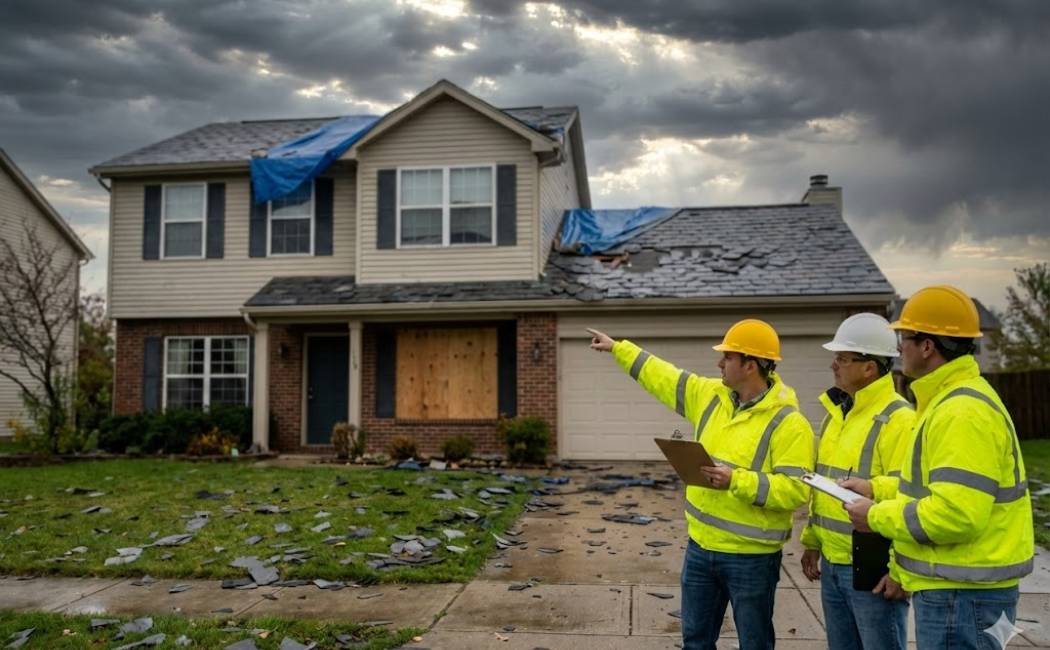
Out of all damaging storms, hail and high winds are particularly disgusting and can cause considerable wind damage and hail damage in a matter of seconds. Damage, if tough, can require complete wood and water damage repair and can, if not done quickly, cause additional water-related damages and mold removal costs. In severe cases, damage can lead to electrical fire risks and severe damage to a structure’s framework. Hail and wind storms can lead to large-scale water restoration, mold growth, and deeper structural failures if not handled correctly.
Businesses and homeowners who act on restoration quickly reduce repair costs significantly. This is why and how so many property owners are able to trust and rely on Best Home Building & Renovation Service after severe storms. Moving fast after storms to begin restoration is not optional; it is essential.
Step 1 - Confirm Safety First
Before assessing any damage or making damage assessments, ensure that the area is safe.
Identify Dangerous Conditions
Systematically survey your premises, keeping in mind the following threats that the storms may have left behind.
- Unearthed electrical wires
- Fallen trees and branches
- Loose elements of roof construction
- Broken glass and other sharp objects
- Weak or missing walls, ceilings, and structures
If any section of your house appears unsafe, do not try to review it yourself.
Evacuate if Necessary
If the structure appears compromised or if there is a significant amount of water in the area:
- Relocate your family or residents to a safe space.
- Avoid going into spaces that have drooping ceilings or areas where water is pooled.
- Ensure that children and pets are kept away from affected areas.
- In the case of a business, staff should be discharged, and residents should be quickly informed until a professional evaluation is made.
Step 2 - Comprehensive Damage Documentation
Do not clean up or rearrange anything before documenting the outcome of the incident.
- Take photographs of all the affected areas
- Take both close-up and magnifying photographs.
- Take videos of any leaks and changes in the structure.
Create a folder, noting all the damaged pieces, including furniture and equipment. This information will be needed to make the insurance claims and for restoration contractors to understand the full picture of the damage.
Step 3– Notification of Insurance
Again, you missed step 3, but it’s necessary for proper flow. Please contact your insurance company as soon as you can. Submit photographs, videos, and your notes. Inquire about:
- Coverage for hail and wind claims.
- Payment for temporary repairs.
- Whether an adjuster will come to your location.
The faster you initiate the insurance process, the faster you will be able to complete repairs.
Step 4: Limit Additional Damage Description Over Time
In the result of damage recording, photos, and the appropriate cue to your insurance company, and filing the insurance claim, there is always damage limitation that must take place to keep the problem from getting worse.
Covering of Temporary Roofs and Blankets
In the event your roof is worn, or there are missing shingles or roof panels, a tarp can be chained to the roof to keep rain from entering the space, and there is debris on the roof. Inverted windows can be assisted by plywood substitutes or thick winter plastic covering sheets.
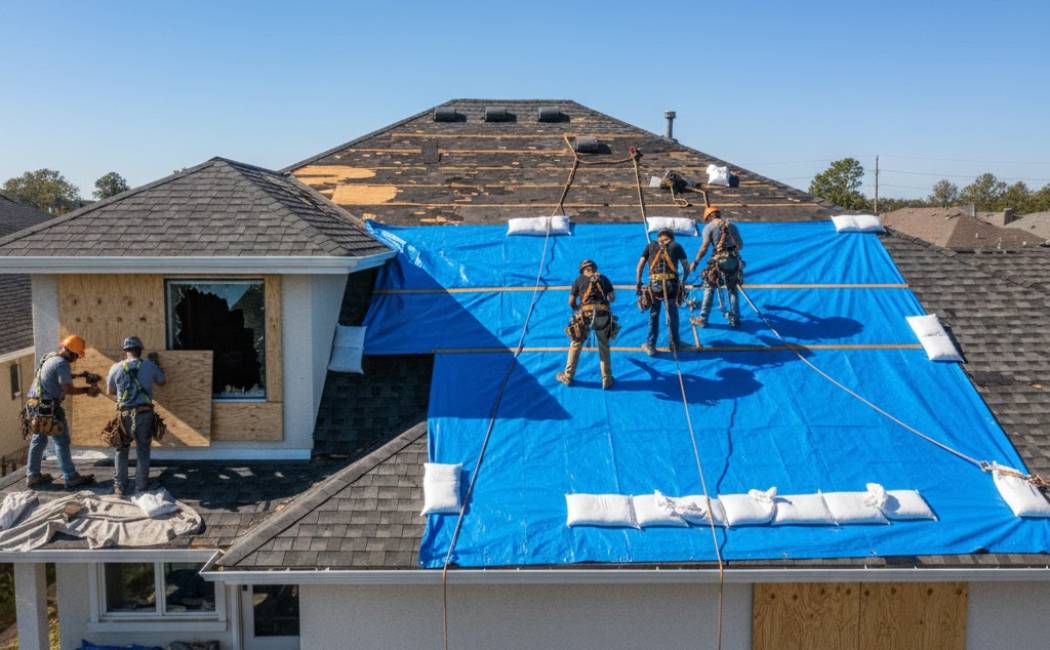
As a result of the limited protection in the temporary, the following may be avoided: mold in roof spaces, regressions of interiors, and damage to electronic systems.
Bolt Down Unsecured Items
After a storm, open objects that can either be self-destructing or self-exploding in a storm, such as supports, outdoor furniture, broken drain gutters, or fencing, may create a new hazard on their own.
Step 5 - Hiring a Professional Restoration Team
Hiring a professional restoration team is perhaps the most important step to take after the storm is over. Recovery after storm damage is a fragile task. Professionals understand how to fix the repairs and identify any hidden structural issues to do so safely.
Why expertise matters
Repairs caused by storms differ from regular repairs to the home. If not done properly, there can be severe consequences.
- Water can be trapped behind the walls.
- Damage to the roof may be able to get worse over time.
- Repairs that are done poorly can put the home at a lower value.
- Electrical issues can be damaged and remain undetected.
An experienced restoration team is able to fix long-term consequences and ensure the property is safe.
Factors to Consider When Choosing a Contractor
Pick a company that is:
- Certified and covered
- Informed in hail and wind damage
- Can give feedback or verification of previous projects
- Available in times of emergency
- Visionary when it comes to cash flow and time management
Companies such as Best Home Building & Renovation Service that possess reliability are storm damage recovery specialists, offering both expertise and reliability in the work.
Step 6 — Addressing Differences in Storm Damage to Residential and Commercial Properties
Homes and businesses can suffer storms in the same geographic region, and will find damage to roofs, siding, shingles, windows, and walls, and will drown VoC into the interiors, with furniture and floors. In regard to business properties, there will likely be additional needs that are rather unique to commercial infrastructure.
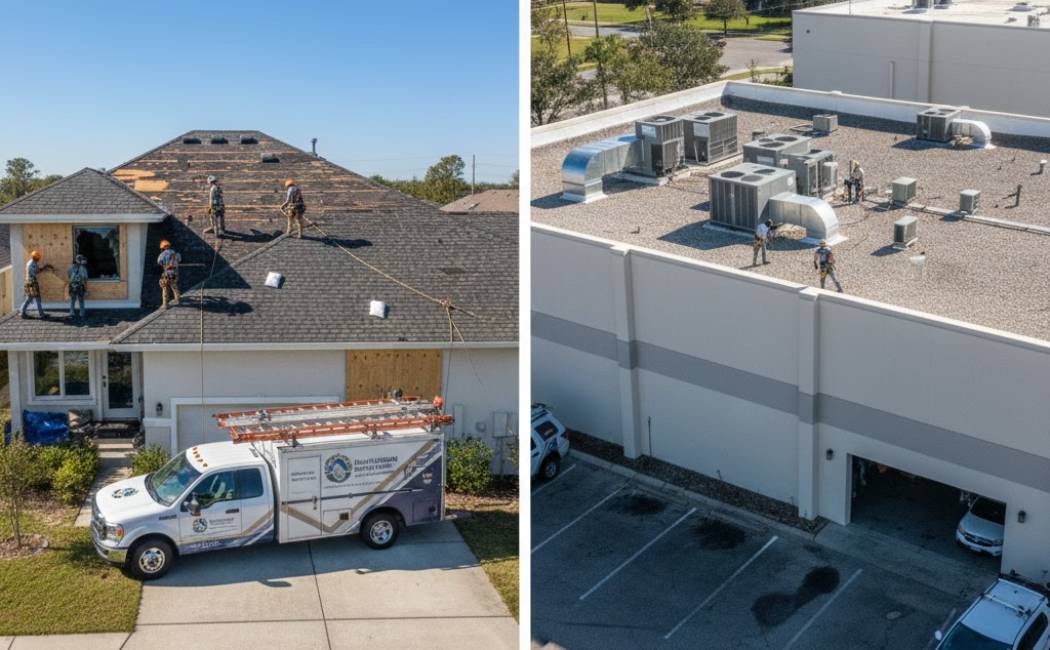
When considering storm damage to your commercial real estate, keep in mind that there will be flat roofs that need to be assessed. Also consider mechanical and HVAC systems that may be compromised.
Do you have business exterior signing that needs to be replaced?
In larger commercial properties, there will be a need to do a structural inspection and assess safety related to the residents and employees with regard to damage. When considering storm damage repairs, here's the best damage reduction order, however of the type of property:
- Safety first — do an emergency check for compromised electrical and structural systems that may be in place.
- Stop any water disruption.
- Repair structural systems.
- Finish with non-structural, cosmetic fixes.
The damage reduction order gives the affected space safety and functionality first.
Step 7 — Post-Repair Tips for Long-Term Protection
After repairs are complete, take steps to strengthen your property for the future.
Reinforce Vulnerable Areas
Consider Upgrading:
- Roofing shingles to impact-resistant materials
- Storm-rated windows and doors
- Gutters and downspouts
- Siding panels
- Roof flashing and cements
These supports reduce future damage from hail or wind.
Schedule Regular Inspections
At least once a year — and especially before storm season — hire professionals to inspect:
Early detection prevents small weaknesses from becoming major damage during the next storm.
Conclusion:
The first phase of recovering from severe weather damage is always the hardest. Your primary focus should always be recovery, ensuring that damage is minimized, and that steps are taken in a cost-effective manner. Safety should always come first, and every detail of damage should be recorded for insurance purposes. Take steps to reduce damage and leave repairs to experienced professionals to avoid becoming overcome. Best Home Building & Renovation Service is trusted for their swiftness and safety when dealing with hail, wind, and other structural problems. Prepare for the storm and act quickly to avoid long-lasting damage to your home or business.