Preparing Your Parking Lot for Winter & Freeze/Thaw Cycles
Though Texas and the surrounding areas are renowned for their warm temperatures, the winter season still has its own surprises. Freezing nights, sudden shifts into cold weather, moisture changes, and stark swings in temperature do their damage on the pavement in parking lots. These conditions bring on the freeze/thaw cycle, a powerful phenomenon that collapses surfaces, enlarges voids, and leads to the need for expensive repairs. Reduction of these repairs must occur early on to avoid further damage to the surfaces.
Predicting the damage winter will do to pavement and taking steps to reduce that damage will avoid costly resurfacing and help keep drivers and pedestrians safe. These winter risk assessments and preparation actions are performed by specialized Parking Lot Restoration contractors.
Understanding of the Freeze/Thaw Cycle and Its Effects on Pavements
How moisture penetrates asphalt and concrete
Moisture can make its way through pavement via the following:
- tiny surface cracks
- tiny fissures/ pores
- joints and seams
- expansion joints and edges
Moisture infiltration can make the pavement’s base even more sensitive to frost heaving and ice lens formation, leading to the development of spring thaw cycles.
What will happen when moisture freezes
As winter arrives and water trapped within the pavement freezes and expands, the following can happen:
- Ice builds internal pressure within the pavement
- Ice will force cracks to grow
- Ice will break down weakened regions
- Ice leads to the formation of pavement surface voids
If you repeat this several times during the winter, you will significantly weaken even the strongest parking lots.
Why are parking lots in Texas particularly prone to this?
Texas parking lots do not undergo extended winter freeze cycles, which is great. But the problem is the quick and irregular changes in temperature. Warm periods during the freeze, followed by cold nights, can quicken the freeze/thaw cycle, leading to even more pavement weakening and quicker frost heaving.
Step 1 — Conduct a Full Pre-Winter Inspection
Look for Small Cracks, Surface Aging, and Early Potholes
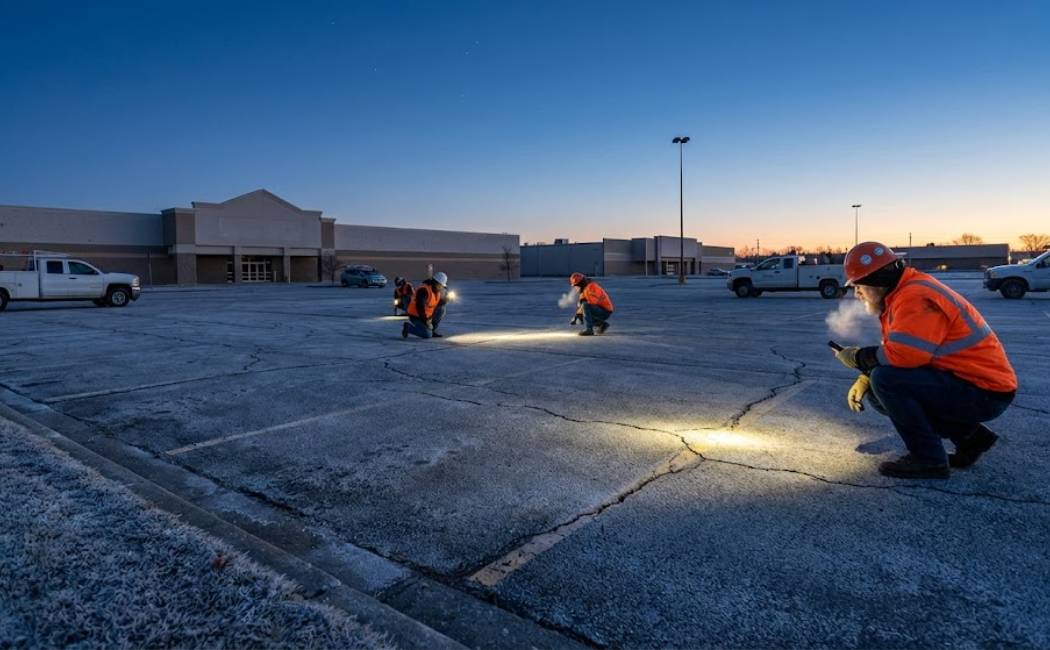
Identifying early signs is the key to prevention. Property managers should look for:
- Hairline cracks
- Surface discoloration or fading
- Soft spots or depressions
- Minor potholes that can grow in winter
Addressing these issues before cold weather hits prevents major structural damage.
Evaluate Drainage Issues
Standing water is a major threat. It often collects due to:
- Blocked drains
- Poor slope design
- Low-lying areas
- Broken curbs or uneven transitions
Since standing water freezes and expands, it can worsen cracking, weaken asphalt, and damage the foundation.
If drainage problems are significant, it’s wise to contact a professional for a full assessment before winter arrives.
Step 2 — Repairing Damage Before The First Freeze
Every small crack must be repaired early. Repairing early is important as it prevents moisture infiltration in the surface voids.
- It stops freeze patching inflation.
- It stops the freeze-thaw cycles that harm the surface.
- Repaired patches remove the frozen moisture and moisture that captures and softens the brittle surface.
- Use durable patches that reinforce the weakened sections and remove the moisture.
Common materials used are hot rubberized crack sealants, asphalt patches, and cold-mix repairs for residual damage.
Commercial parking lots are identifiable by weak edges and seams. Pavement edges and seams are damaged due to the traffic loads and the chambered water systems. Water is always pushed and chambered at weak pavement edges. This weak pavement is a point of surface damage. Surface damage is permanent and lost, and water infiltration is accelerated. Surface unravel is accelerated. Surface damage is a direct cause of early spring potholes.
Stage 3 – Protective Seal Coating for Winter
Advantages of Fall Seal Coating
Having a sealcoat applied before winter offers the following advantages.
- Protective barrier against moisture
- Resistance against UV rays and oxidation
- Smoother and safer driving surfaces
- Visually more pleasing
For ensuring durability in cold weather, sealcoat is one of the most effective preventative maintenance strategies.
Best Time for Seal Coating
The sealcoat must be properly cured. This requires the following weather conditions:
- Dry weather
- Moderate temperatures
- No freezing temperatures overnight
Therefore, the early fall period is ideal. If sealcoat application is procrastinated until too late in the season, inadequate curing and decreased durability protection will occur.
Step 4 - Enhance Drainage Systems to Reduce Water Pooling
With this time of year, having clear drainage systems is key to having a peaceful and uneventful winter. Things to keep in mind include the following:
- Removing debris from drainage systems
- Cleaning encapsulated gutters in the parking lot.
- Making sure outflowing channels are open
- Preventing water puddle accumulation in the drive lane curbs.
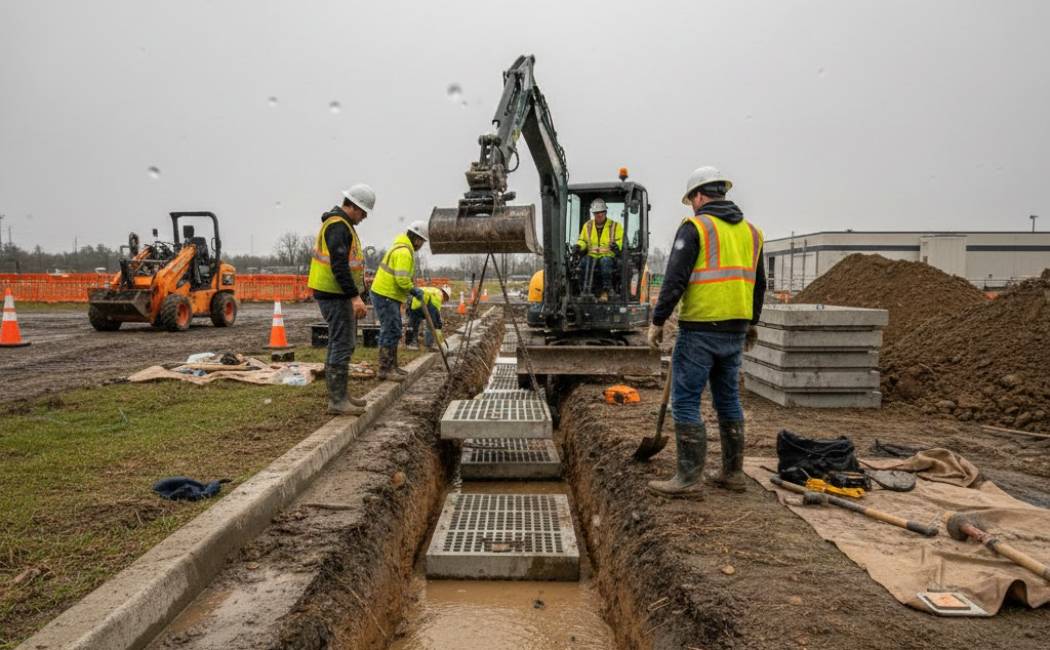
When moisture can evaporate freely, it reduces the occurrence of developing ice, therefore minimizing the damage caused by repeated freezing and thawing events.
Leveling and Adding Drainage Solutions
Whether you anticipate winter moisture accumulation in an area of your parking lot that is lower-lying, or in a section of pavement that is flat, you should consider:
- Re-grading the parking lot
- Installing French drainage systems
- Adding trench drains
- Implementing gutter systems
These actions are necessary to keep water from winter degenerating paving sections and to limit water from sluggishness in an area.
Step 7 -- When to Request Assistance of Specialized Teams
Observation of Warning Signs that Demand Specialized Professional Assistance. Consult professionals when you notice:
- Extensive damage and cracks
- Repeated clogging and drainage problems
- Damage to the structural base
- Numerous deep
- Deterioration of the surface
Typically, these problems require specialized equipment and skill.
Benefits of Collaboration with Professional Experts
Repair done by specialized restoration teams is:
- Quicker and more precise
- Use quality premium materials
- Winter-proof and more durable
- Well coordinated and planned with a complete inspection.
Once the damage done by winter is too much to handle, Best Parking Lot Restoration Service will take the appropriate actions to safeguard your pavement and restore permanent strength.
Conclusion
If you live in an area with unstable temperatures and lots of snow, getting ready for winter with follow-up ice control and snow smash is crucial for winter and spring damage. If you inspect, repair, seal coat, set up better drain management, do frequent winter site reviews, and follow up in spring, you will significantly reduce snow damage and add years to the life of your winter parking lot.
If your snow parking lot is managed in advance, you will reduce damage and repairs come spring. Get in touch with your experts now to get ready for winter damage control and secure your valuable lot before cold weather.